Mastering Teen Patti: Top Tricks to Elevate Your Game
It is simple, yet has real strategic depth. While luck is a factor in any card game, it is the players who understand the psychology, probability and betting patterns that separate the casual from the skilled player that consistently come out on top. Whether you’re a newbie getting the hang of the ropes or a regular player looking to sharpen your edge, this guide breaks down the tricks that actually matter.
Understanding the Basics Before the Tricks
Before diving into advanced tactics, it's worth revisiting the fundamentals. Teen Patti is played with a standard 52-card deck (no jokers, unless house rules say otherwise), and each player is dealt three cards face down. The goal is simple: have the best three-card hand, or convince everyone else that you do. Players bet in rounds, either "blind" (without looking at their cards) or "seen" (after viewing their hand), and the pot goes to whoever remains standing at the showdown or whoever everyone else folds to.
The hand rankings ( Teen Patti Variations ), from highest to lowest, are:
- Trail/Trio (three of a kind)
- Pure Sequence (straight flush)
- Sequence (straight)
- Color (flush)
- Pair
- High Card
Knowing these rankings instinctively—without having to pause and think—is the first step toward playing faster and more confidently, which itself is a subtle psychological advantage.
Deep Dive New Information
📎 Related: Teen Patti Master | Teen Patti Master APK | Teen Patti Gold | Teen Patti DhaniTrick 1: Master the Art of Selective Aggression
New players often fall into one of two traps: playing too passively, folding at the first sign of resistance, or playing too aggressively, betting big on every hand regardless of strength. Skilled players do neither. Instead, they practice selective aggression —betting big and applying pressure only when the situation favors them, whether that's because they hold a strong hand or because they've read weakness in their opponents.
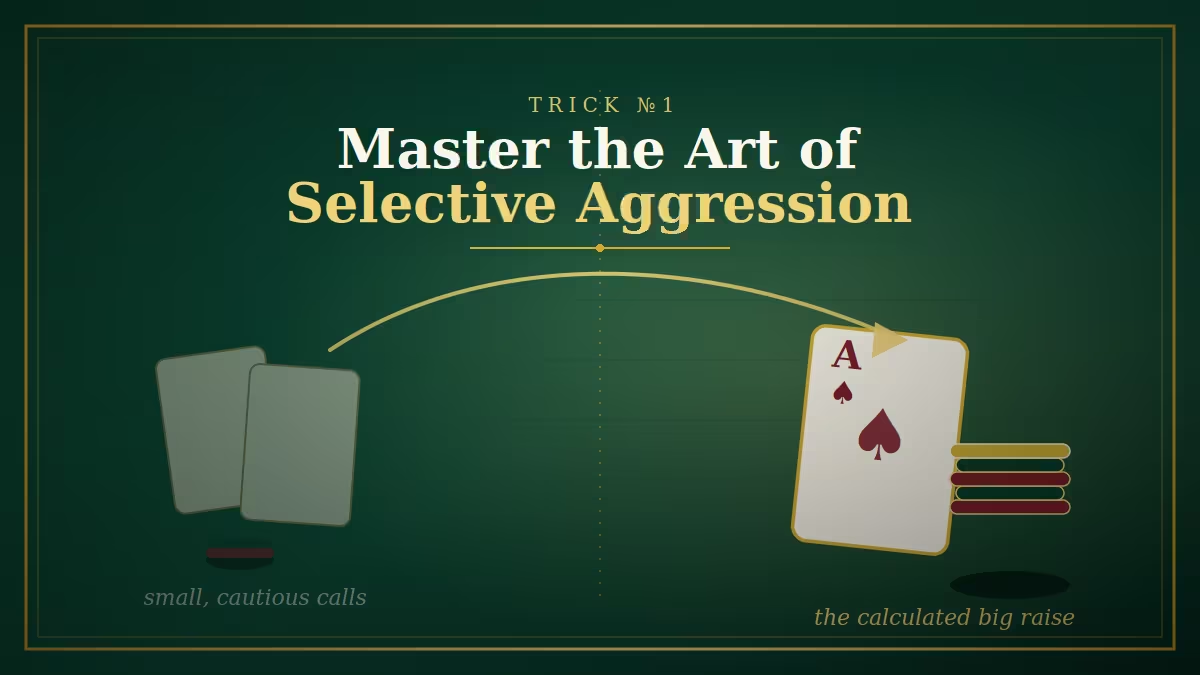
The key is to vary your aggression so it doesn't become predictable. If you only raise big with trails and pure sequences, observant opponents will fold immediately every time you bet heavily, and you'll rarely win a big pot. Occasionally applying the same pressure with a mediocre hand keeps opponents guessing and prevents them from reading your play like a book.
Trick 2: Play Blind Strategically, Not Randomly
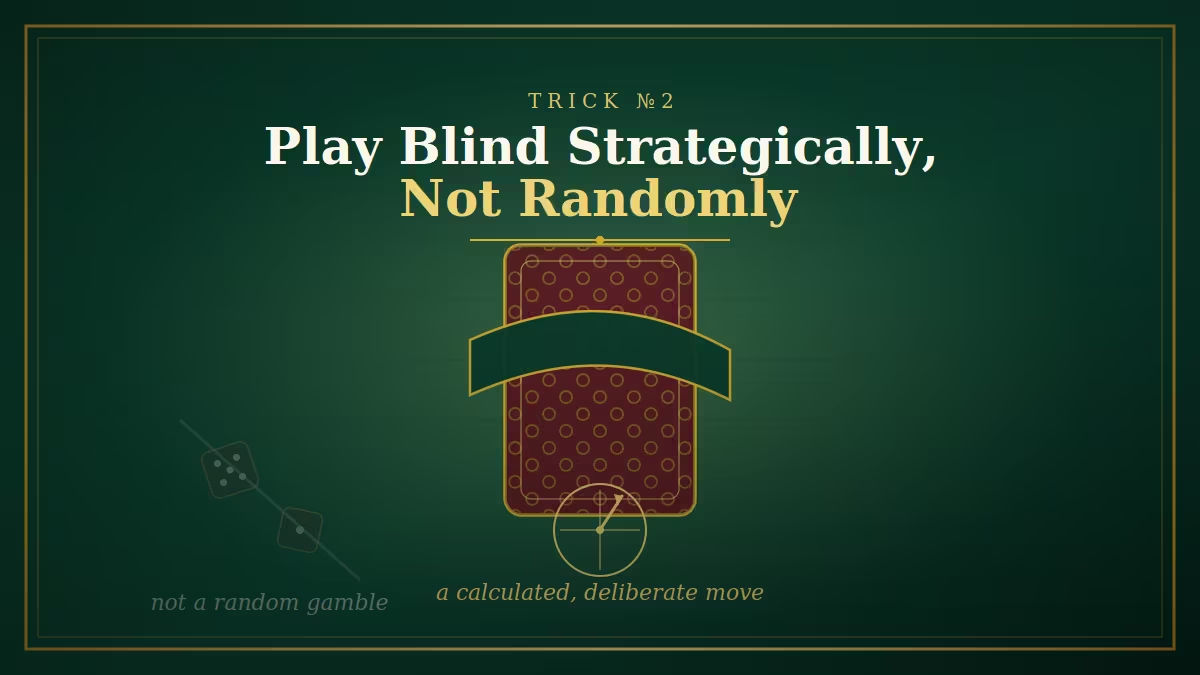
Playing blind—betting without looking at your cards—is a classic Teen Patti maneuver, and it's more than just a bold move for the sake of bravado. Blind play has real strategic value:
- It keeps your bets lower since blind bets are typically half of what a seen player must wager, letting you stay in the hand cheaply while gathering information from others.
- It disguises your intentions. Opponents can't read your body language or betting pattern the same way when they know you haven't looked at your cards.
- It pressures seen players. A confident blind bet can make seen players with mediocre hands nervous, since they can't be sure whether you're holding something strong.
The trick is knowing when to transition from blind to seen. Staying blind for too long against aggressive betting can be costly, while switching to seen too early gives away information. A good rule of thumb: stay blind through the early betting rounds when stakes are low, then look at your cards once the pot grows large enough that continuing blind becomes a real gamble.
| Play Other Games 2026 | |
|---|---|
| Teen Patti Lotus | Teen Patti Sweet |
| Teen Patti Super King | Teen Patti Epic |
| Teen Patti Joy | Teen Patti Master |
Trick 3: Learn to Read Betting Patterns, Not Just Cards
Teen Patti, like poker, is as much a game of people as it is a game of cards. Every player develops habits, even if they don't realize it. Some players only raise aggressively when they have a trail or pure sequence. Others chip in small, steady bets no matter what they're holding, hoping to stay in as long as possible without risking too much.
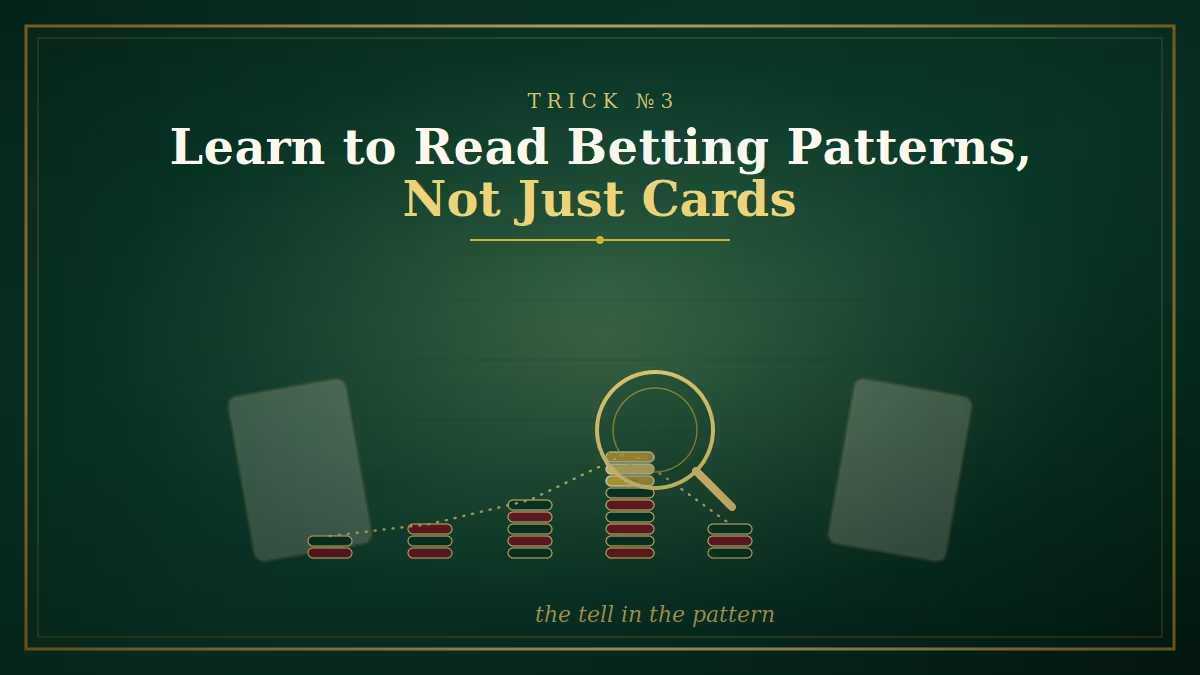
Pay close attention to:
- Bet sizing changes. A sudden jump in bet size often signals genuine confidence—or a bluff meant to look like confidence.
- Timing. Players who bet instantly are sometimes bluffing because they don't want to seem hesitant; players who pause before a big raise are often deciding whether their strong hand is worth pushing further.
- Consistency across sessions. If you play regularly with the same group, keep a mental (or literal) note of who bluffs often and who plays it safe. This information compounds over time and becomes one of your most valuable tools.
Trick 4: Manage Your Bankroll Like a Professional
No trick or strategy matters if you run out of chips before you get the chance to use it. Bankroll management is arguably the most underrated skill in Teen Patti, and it's what separates players who last through a long session from those who bust out in the first twenty minutes.
A few practical guidelines:
- Set a session limit before you start playing, and stick to it regardless of how the game is going.
- Avoid chasing losses. After a bad hand, the temptation to bet bigger to "win it back" is one of the fastest ways to drain your stack. Stay disciplined and stick to your normal betting rhythm.
- Scale your bets to the pot, not your emotions. Decisions should be based on the strength of your hand and the size of the pot, not frustration or excitement.
Earn Money by Playing Game: Teen Patti Master Bonus
Trick 5: Use the Power of the Side Show Wisely
The side show (or "compare") is a unique Teen Patti feature that lets a seen player challenge the previous seen player to a private card comparison, with the loser folding immediately. This tool is often underused or misused by newer players.
Side shows are most valuable when:
- You're fairly confident in your hand but want to eliminate a competitor cheaply without committing more to the pot.
- You suspect the player before you is bluffing and want to test that theory without escalating the bet for everyone else at the table.
However, side shows can backfire if used carelessly—agreeing to one with a weak hand against an aggressive better is a fast way to lose a pot you might have otherwise won through a fold from someone else. Use this move as a scalpel, not a hammer.
Trick 6: Don't Underestimate Table Position
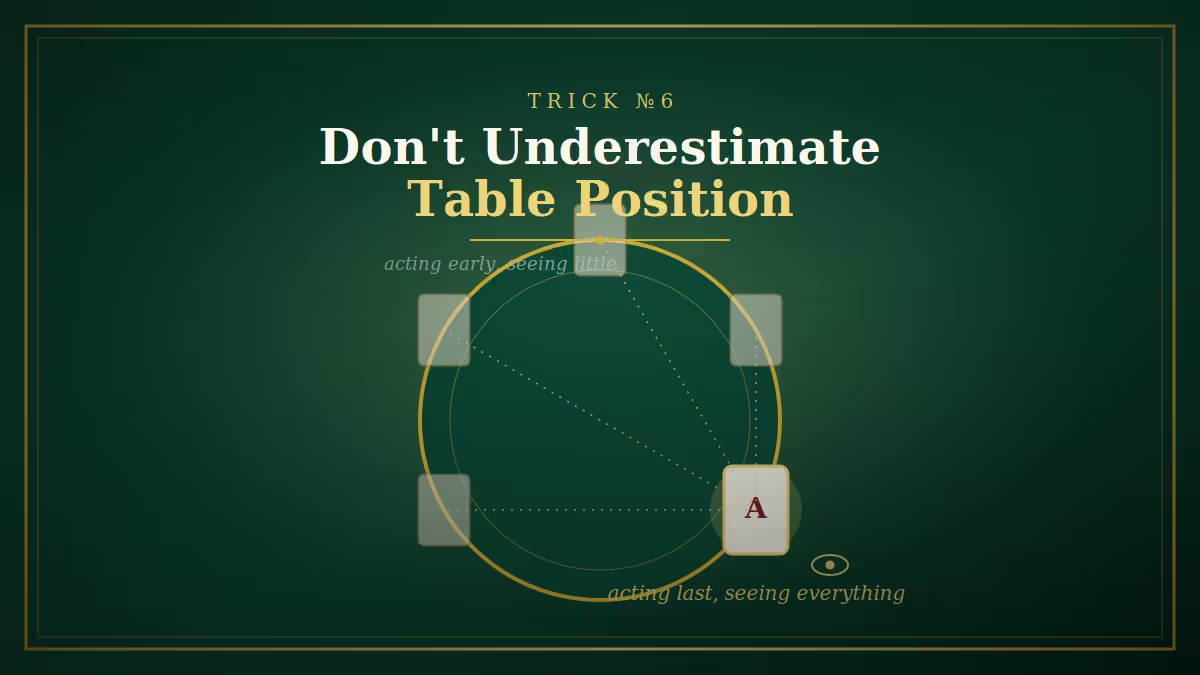
Just like in poker, where you sit relative to the dealer and other players affects your strategic options. Acting later in the betting order gives you more information: you get to see how others have bet before deciding your own move. Use this advantage by playing slightly tighter (more selectively) when you're an early bettor, and slightly looser when you have positional information from players who've already acted.
Trick 7: Control Your Emotions and Table Image
Teen Patti tables can get emotionally charged, especially when big pots are on the line. Players who let frustration, excitement, or overconfidence show on their faces or in their betting patterns give away valuable information. Cultivating a calm, consistent table image—regardless of whether you're holding a trail or a weak high card—makes you significantly harder to read.

This also ties back into deception. Skilled players sometimes deliberately project false confidence with a weak hand or hesitation with a strong one, subtly manipulating how opponents perceive their bets throughout the game.
Trick 8: Know When to Fold
Perhaps the hardest skill to develop, but one of the most important: knowing when to walk away from a hand. Many players lose money not because they play bad hands, but because they refuse to let go of decent-but-not-great hands when the betting escalates beyond what the odds justify. A pair of eights might feel exciting early on, but if three players are raising aggressively, it's often better to save your chips for a stronger opportunity.
Trick 9: Practice Reading the Pot Odds
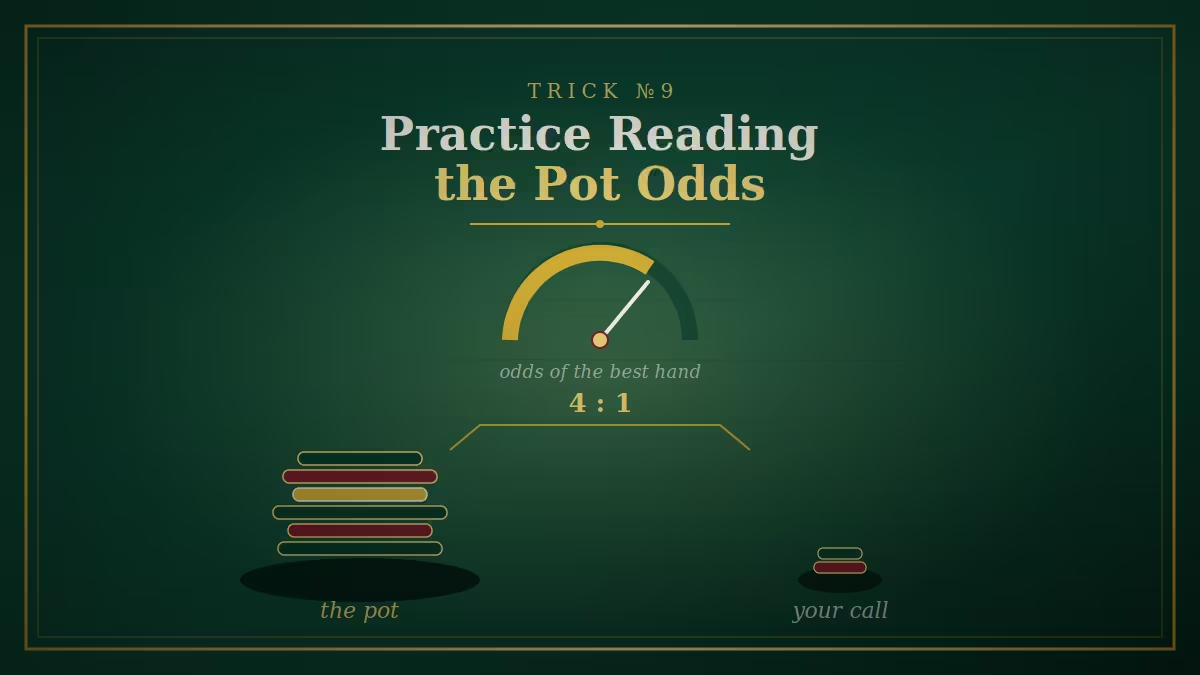
Even in a fast, social game like Teen Patti, basic pot odds thinking can improve your decisions. Ask yourself: how much do I need to bet compared to the size of the pot, and how likely am I to have the best hand? If the amount you need to call is small relative to the pot, it can make sense to stay in even with a mediocre hand, especially early in the betting rounds. As the required bet grows, your hand needs to be proportionally stronger to justify staying in.
| Read More Blog | |
|---|---|
| Top Teen Patti Apps India | Best Teen Patti Apps-In Depth Comparison |
| Teen Patti Master Alternatives | How to Play Teen Patti Master? |
| Teen Patti Master Tips | |
Frequently Asked Questions
1. What is the best hand in Teen Patti?
A trail (also called a trio or set) three cards of the same rank, such as three aces is the highest-ranking hand. A pure sequence (three consecutive cards of the same suit, like 4-5-6 of hearts) ranks just below it.
2. Is it better to play blind or seen?
Neither is inherently better; it depends on the situation. Blind play keeps your bets lower and hides information from opponents, making it useful early in a hand. Seen play gives you certainty about your own hand's strength, which becomes more valuable as the pot grows and bets get bigger. Strong players switch between the two based on pot size and how opponents are betting, rather than sticking to one approach out of habit.
3. How many players can play Teen Patti?
Traditionally, Teen Patti is played with 3 to 6 players, though some variations and online platforms allow up to 7 or more players at a single table.
4. What's the difference between a "side show" and a regular showdown?
A side show is a private request between two consecutive seen players to compare hands before the betting round ends, with the loser folding immediately. A showdown, by contrast, happens at the end of the betting when all remaining players reveal their cards to determine the winner of the entire pot.
5. Can Teen Patti be played without real money?
Yes. Many people play with chips, tokens, or points purely for fun during social gatherings, and several mobile apps offer free-to-play versions with virtual currency. The strategic tricks in this guide apply just as well to casual, stakes-free games.
6. What's the most common mistake beginners make?
Staying in a hand too long out of curiosity or excitement, rather than folding when the odds and betting pattern suggest a loss is likely. Overvaluing pairs and high cards against aggressive betting is a frequent and costly error.
7. Does bluffing actually work in Teen Patti?
Yes, but it works best when used selectively and paired with a consistent table image. Bluffing every hand makes you predictable and easy to read; bluffing occasionally, especially after establishing a pattern of only betting big with strong hands, is far more effective at catching opponents off guard.
8. Are there different variations of Teen Patti?
Yes. Popular variations include Muflis (where the lowest hand wins instead of the highest), AK47 (where specific cards act as wild cards), and Joker Teen Patti (where a randomly chosen joker card can substitute for any card). Rules and optimal strategy can shift slightly depending on the variation being played.