How to Play Indian Rummy (13 Cards) – Rules & Tips 2026
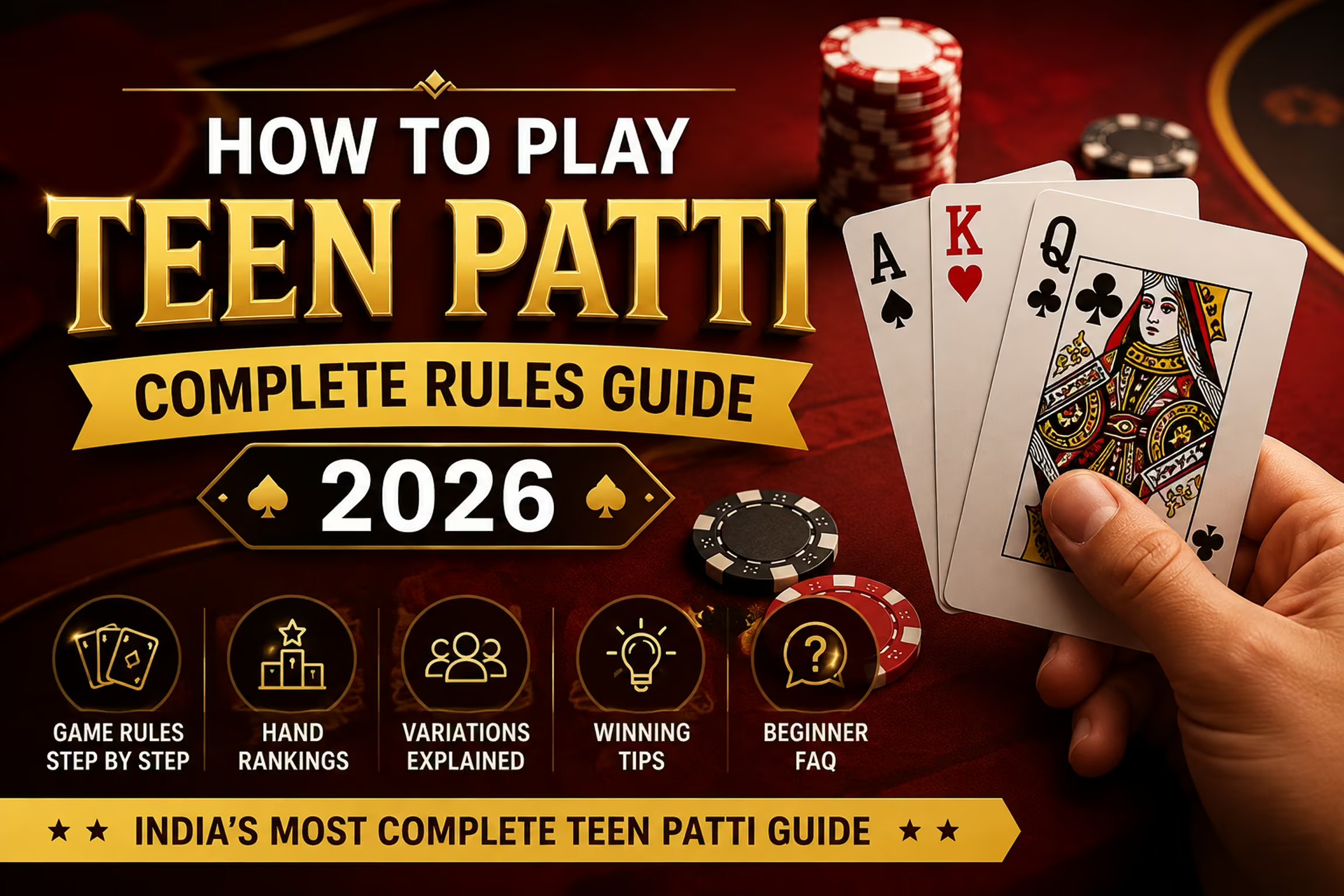
Teen Patti — literally meaning 'three cards' — is one of India's most beloved card games, played at festivals, family gatherings, and increasingly on mobile apps by millions of players every day. If you've watched others play and never quite understood the rules, or if you want to sharpen your strategy before joining a real table, this guide covers everything from the very basics to advanced tips.
What Is Teen Patti?
Teen Patti is a three-card gambling-style card game that originated in India and draws clear parallels with the British game of Three Card Brag and, more distantly, with Poker. It is played with a standard 52-card deck without Jokers (unless playing a Joker variation), and typically involves 3 to 6 players seated around a table.
The objective is straightforward: have the best three-card hand among all remaining players, or outlast opponents through strategic betting, and win the pot — the accumulated bets from all players in that round.
Teen Patti is especially popular during Diwali, Navratri, and other festive occasions in India, and has seen massive growth as an online real-money and free social game in recent years, with apps like Teen Patti Master , Teen Patti Gold , and dozens of others bringing it to Android and iOS devices.
What You Need to Play
| Item | Detail |
|---|---|
| Deck | 1 standard 52-card deck (no Jokers for Classic mode) |
| Players | 3 to 6 players (4–5 is ideal) |
| Chips or Cash | Agreed denomination for betting |
| Dealer | Rotates clockwise after each round |
| Boot Amount | Minimum stake agreed before dealing — creates the starting pot |
How to Play Teen Patti — Step by Step
Here is a complete walkthrough of one round of Classic Teen Patti:
Step 1 — Set the Boot Amount
Before any cards are dealt, all players agree on a boot amount — the minimum stake. Every player puts this amount into the pot. The boot amount also determines the minimum bet size for the round. For example, if the boot is ₹10, the minimum bet a blind player places is ₹10, and a seen player's minimum bet is ₹20.
Step 2 — Deal Three Cards Face Down
The dealer distributes three cards face down to every player, starting from the player to the dealer's left and going clockwise. No one should look at their cards yet — though they may choose to remain 'blind' throughout the round.
Step 3 — Choose Blind or Seen
Each player now decides whether to look at their cards (become a 'seen' player) or keep them face down (remain a 'blind' player). This is one of the most strategically interesting decisions in Teen Patti — staying blind costs less per round but prevents you from making informed hand decisions.
Step 4 — Betting Rounds Begin
Starting from the player to the dealer's left, each player takes a turn to bet. The options are:
• Call (Chaal): Match the current bet amount. Blind players call at the current stake; seen players call at double the current stake.
• Raise: Increase the bet, which forces subsequent players to match the higher amount.
• Fold (Pack): Surrender your hand. You lose your contributions to the pot but avoid further losses if your hand is weak.
Step 5 — Sideshow (Optional)
Once a player is 'seen,' they can request a sideshow (also called Compromise or Back Show) from the player who bet just before them — but only if that player is also seen. The two players privately compare their cards. The player with the weaker hand must fold. We cover this in detail in Section 6.
Step 6 — Elimination
Players who fold exit the round. Betting continues until only two players remain.
Step 7 — Showdown
When only two players are left, either player can call for a Show — paying double the current stake. Both players reveal their cards simultaneously. The player with the higher-ranking hand wins the entire pot. In the case of equal hands, the player who did NOT call for the show wins.
Teen Patti Hand Rankings — Highest to Lowest
These are the six possible hand types in Classic Teen Patti, ranked from strongest to weakest:
| Rank | Hand Name | Also Called | What It Is | Best Example |
|---|---|---|---|---|
| 1 — Highest | Trail | Trio / Three of a Kind | Three cards of the same rank | A♠ A♥ A♦ |
| 2 | Pure Sequence | Straight Flush | Three consecutive same-suit cards | A♠ 2♠ 3♠ |
| 3 | Sequence | Normal Run / Straight | Three consecutive mixed-suit cards | 5♠ 6♥ 7♣ |
| 4 | Color | Flush | Three same-suit cards, not consecutive | 2♦ 7♦ J♦ |
| 5 | Pair | Double | Two cards of the same rank | K♠ K♥ 3♣ |
| 6 — Lowest | High Card | — | No combination — highest card plays | A♠ K♥ 2♣ |
Hand Ranking Tiebreakers
When two players have the same hand type, these tiebreaker rules apply:
- Trail: Higher rank wins. Three Aces beat three Kings.
- Pure Sequence / Sequence: Higher top card wins. A-K-Q beats K-Q-J. Note: A-2-3 is the second highest Pure Sequence (after A-K-Q).
- Color / Flush: Compare highest card first, then second, then third.
- Pair: Higher pair wins. If pairs are equal, the third card (kicker) decides.
- High Card: Compare cards from highest to lowest until a difference is found.
Blind vs Seen — The Core Strategic Decision
The Blind vs Seen decision is the most distinctive element of Teen Patti and the one that most separates experienced players from beginners.
| Blind Player | Seen Player | |
|---|---|---|
| Cards | Has NOT looked at cards | Has looked at cards |
| Minimum bet | Current stake amount | Double the current stake |
| Can request Sideshow? | No | Yes (from another seen player) |
| Psychological advantage | Others don't know your hand OR if you know your hand | Others know you've evaluated your hand |
| Best used when | You want to keep pressure up cheaply | Your hand warrants a decision |
Why Playing Blind Has Strategic Value
Playing blind keeps your cost per round at half the stake of seen players. More importantly, it creates uncertainty for opponents — they cannot read your hand strength from your betting behavior because you genuinely haven't seen your cards. Experienced players sometimes stay blind for several rounds specifically to build pot pressure cheaply while unsettling seen players.
However, staying blind indefinitely has a ceiling — eventually you'll need to either see your cards or fold if the stakes escalate beyond your comfort.
Side Show (Compromise) — When and How to Use It
A Sideshow is a request made by one seen player to the seen player who bet immediately before them to compare cards privately. The player with the weaker hand must fold. The pot stays intact for the winner of the sideshow.
Sideshow Rules
- Only seen players can request or accept a Sideshow.
- You can only request a Sideshow from the player who bet directly before you in the current round.
- The player receiving the request can refuse — in which case the round continues normally.
- If accepted, cards are compared privately. Weaker hand folds. Equal hands: the player who requested the Sideshow folds.
When to Request a Sideshow
- When you have a medium-strength hand (Pair or Color) and want to eliminate one player.
- When the pot is large enough that losing a Sideshow (and having to fold) is worth the risk of eliminating a stronger player.
Popular Teen Patti Variations
Classic Teen Patti is just the starting point. These variations are played widely — both physically and on apps:
| Variation | How It Changes the Game | Strategy Impact |
|---|---|---|
| Muflis (Lowball) | All hand rankings completely reversed — lowest hand wins | Trail becomes worst, High Card becomes best. Completely inverts Classic strategy. |
| Joker | One or more cards declared wild Jokers — can substitute any card | Trails and sequences appear far more frequently. Value of natural hands decreases. |
| Hukum (Trump) | One suit declared trump — those cards beat all others | Flush hands in the trump suit become extremely powerful. |
| AK47 | Aces, Kings, 4s, and 7s are all wild Jokers | High probability of top hands — aggressive betting is more common. |
| Muflisjoker | Combines Muflis + Joker rules | Requires tracking both reversed rankings AND wild card substitutions simultaneously. |
| 999 | Hand closest to 999 (face cards = 0, others = face value) wins | Completely different objective — no standard hand rankings apply. |
| Sudden Death | Cards revealed one at a time — fold at any point | Fast-paced elimination format, often used for quick rounds. |
Eight Winning Tips for Beginners
These tips apply to both physical and online Teen Patti:
Tip 1 — Start with Small Boot Amounts
Your first several rounds should be learning experiences. Keep the boot amount low while you get comfortable with the betting rhythm, hand rankings, and other players' tendencies. Increasing stakes comes naturally once the flow of the game is familiar.
Tip 2 — Use Blind Play Strategically
Don't look at your cards for the first one or two rounds of a session. Playing blind adds pressure to seen players while costing you only half the stake. If the cards come to you and you're blind, you have plausible deniability in your betting — seen players cannot read whether you have a strong or weak hand.
Tip 3 — Watch Betting Patterns, Not Just Hands
In physical Teen Patti, how opponents bet is often more informative than anything else. A player who raises aggressively as a seen player likely has at least a Pair. A seen player who calls conservatively may be protecting a borderline hand. These patterns repeat — identify them early.
Tip 4 — Know When to Fold
The most costly mistake in Teen Patti is staying in rounds with weak hands to 'see what happens.' Once you've seen your cards and have a High Card with no draw potential, folding early is almost always the better decision. The pot you save by folding is money available for rounds where you have a genuine advantage.
Tip 5 — Manage Your Pot Contribution
Before the round starts, mentally set your maximum contribution to this pot — the amount you're willing to put in before folding. Stick to it. Getting emotionally invested in a pot you've already contributed to is one of the biggest drivers of unnecessary losses.
Tip 6 — In Muflis — Rethink Everything
If the variation is Muflis (Lowball), your Classic Teen Patti instincts will work against you. A Trail — the best hand in Classic — is the worst hand in Muflis. If you're dealt three Aces in Muflis, fold early. High Card with low values becomes your target.
Tip 7 — Use the Sideshow Carefully
A Sideshow request is a commitment — if the other player accepts and your hand is weaker, you must fold. Never request a Sideshow on a whim. Use it when you have at minimum a Pair and want to eliminate a specific player who you believe has a weaker hand.
Tip 8 — Play Free Online First
Before playing real-money Teen Patti on any app, spend time with a free social game version — apps like Teen Patti Gold or Teen Patti Royal offer virtual chips with no real money at stake. This lets you practice hand recognition, betting pacing, and variation rules without financial risk.
Teen Patti Online vs Offline — Key Differences
| Aspect | Physical (Offline) | Online App |
|---|---|---|
| Setup | Need deck, chips, 3–6 players in person | Launch app — instant tables available 24/7 |
| Dealing | Manual — dealer rotates | Automated — RNG-certified random dealing |
| Betting | Physical chips exchanged | Digital wallet — UPI deposit/withdrawal |
| Bluffing | Facial expressions, body language readable | No physical tells — bet timing and amount only |
| Variations | Agreed verbally before each round | Selected from in-app menu |
| Practice | Requires gathering players | Free chip tables available anytime |
| Speed | Determined by players | Typically faster — timer per decision |
| Stakes | Flexible, cash or tokens | Fixed table denominations, min/max limits |
FAQs
How many players can play Teen Patti?
Teen Patti works with 3 to 6 players. The ideal number is 4 to 5 — fewer than 3 removes enough strategic tension to make the game less interesting; more than 6 can make rounds very long with too many fold-then-wait periods.
Is Teen Patti the same as Poker?
They share DNA but are meaningfully different. Teen Patti uses three cards to Poker's five. There is no community card system (like the flop, turn, and river in Texas Hold'em). The Blind/Seen mechanic is unique to Teen Patti and has no direct Poker equivalent. Hand rankings also differ — a Flush in Teen Patti is ranked below a Sequence, which is opposite to most Poker variants.
What is the highest hand in Teen Patti?
Trail (Three of a Kind) is the highest hand — three cards of the same rank. Three Aces (A-A-A) is the absolute best hand in Classic Teen Patti. However, in Muflis (Lowball) variation, Trail becomes the lowest hand.
Can I play Teen Patti without real money?
Yes — free social versions exist on apps like Teen Patti Gold (by Moonfrog Labs) and Teen Patti Royal (by ZMist Games). These use virtual chips with no cash value, are available without registration in some cases, and are the best way to learn the game without any financial risk.
What is 'boot amount' in Teen Patti?
The boot amount is the compulsory minimum stake every player puts into the pot before any cards are dealt. It creates the starting pot and sets the base bet size for the round. A boot of ₹10 means blind players bet ₹10 per round minimum, and seen players bet ₹20 per round minimum.
What happens if two players have the same hand?
If hands are equal in type and rank, the player who did NOT request the show wins. This rule makes the decision of when to call for a show strategically important — sometimes waiting for the other player to call can win you a tied round.
Is Teen Patti legal in India?
Teen Patti played as a social game at home is widely practiced across India. Real-money online Teen Patti is regulated differently by state — states including Andhra Pradesh, Telangana, Assam, Nagaland, Odisha, and Tamil Nadu restrict or ban real-money card gaming. In states where it is permitted, licensed platforms operate legally. Always check your state's current gaming regulations before playing for real money online.
How long does a round of Teen Patti last?
A single round can last anywhere from 2 minutes (if players fold quickly) to 15–20 minutes in a highly contested round with 6 players, multiple sideshows, and rising stakes. Online apps typically have per-turn timers of 15–30 seconds that keep rounds moving.