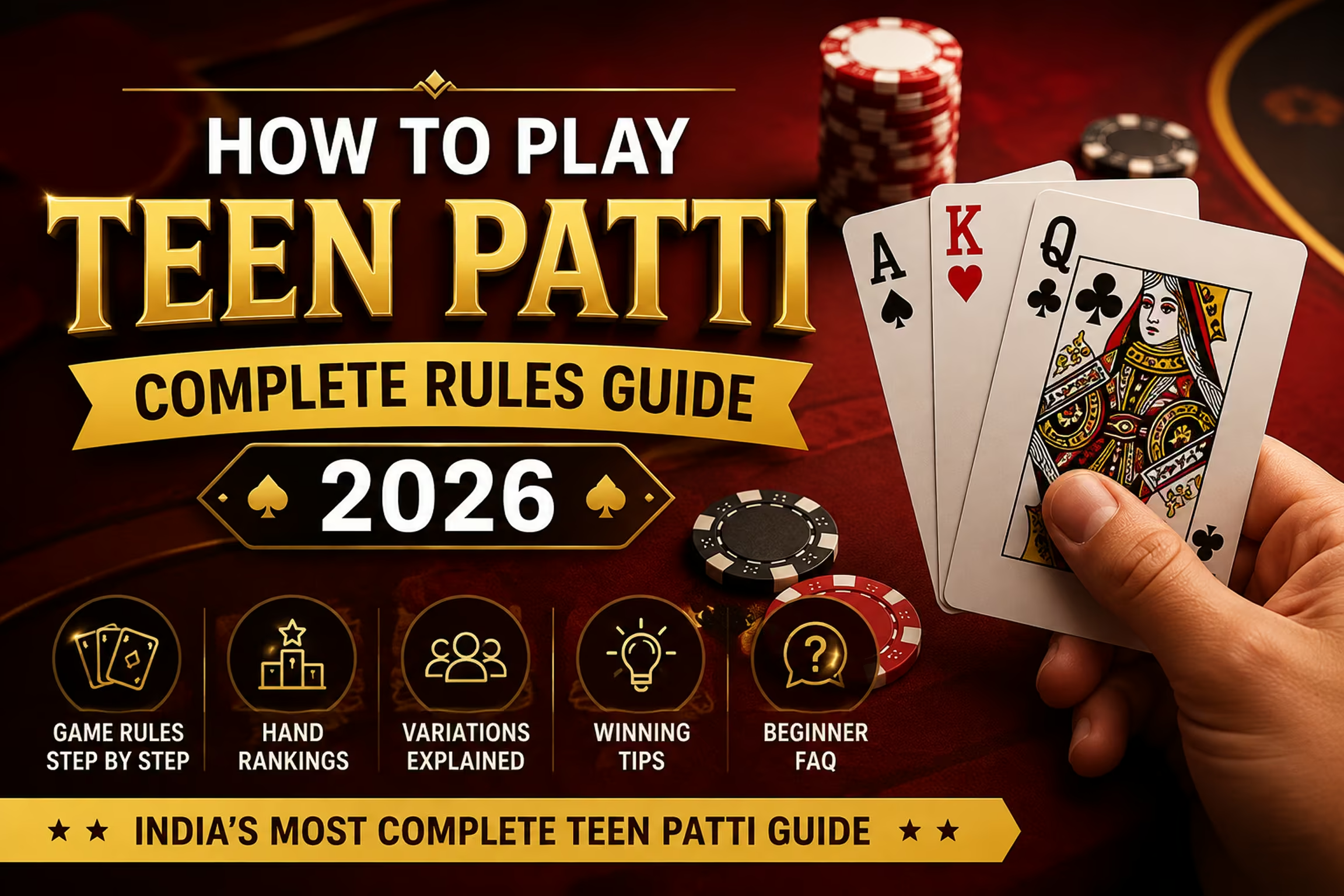
3 Patti Rules and Teen Patti Sequence — Complete Hand Rankings, Probability Chart & Strategies (2026)
Teen Patti (also called 3 Patti, Flash, or Indian Poker) is built on one fundamental foundation: your three-card hand. Know which hands beat which, understand tiebreakers, and you'll make better decisions at every table — whether you're playing Blind or Seen, at a family gathering or on a real-money app.
This is the most complete guide to 3 Patti sequences and hand rankings — covering all six hands with examples, exact tiebreaker rules per hand, probability percentages, how rankings change in popular variations, and the strategies that follow from understanding your hand's strength.
What Is a Teen Patti Sequence?
In Teen Patti, a 'sequence' refers to any valid three-card combination that your hand forms. The term is used loosely to mean your hand type — whether that is a Trail, a Pure Sequence (Straight Flush), a Straight, a Flush, a Pair, or a High Card.
| At a Glance | Detail |
|---|---|
| Cards per hand | 3 (dealt face down at the start of each round) |
| Total hands possible | 22,100 unique three-card combinations from a 52-card deck |
| Hand types | 6 (from Trail at the top to High Card at the bottom) |
| Also called | 3 Patti, Flash, Indian Poker, Flush |
| Ranking logic | Higher hand always beats lower hand — no exceptions in Classic mode |
| Tiebreaker | Card rank within the same hand type; suit rank as final tiebreaker |
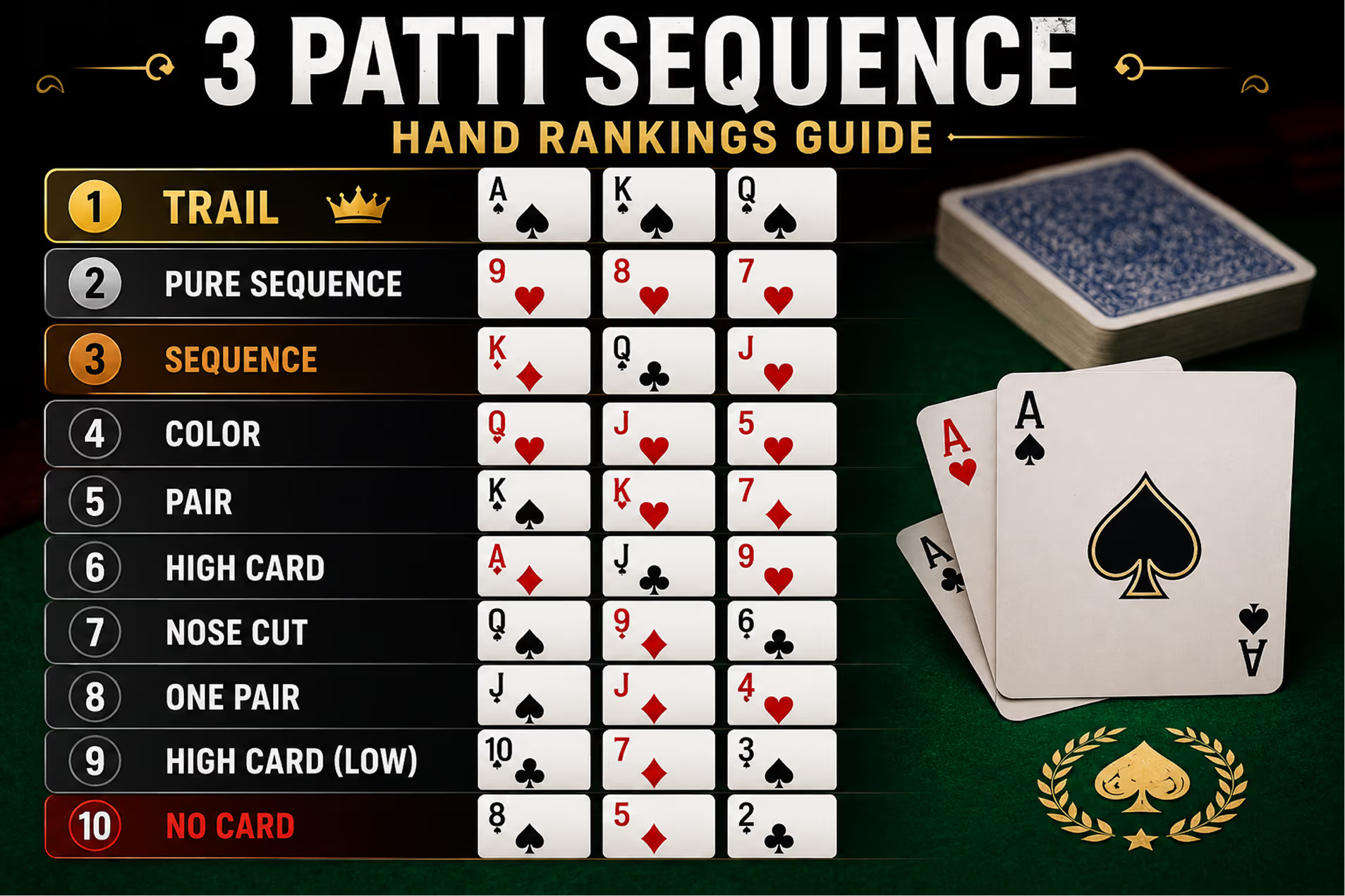
3 Patti Sequence List — All 6 Hands Ranked
Here are all six hand types in Teen Patti, ranked from highest (strongest) to lowest (weakest):
| Rank | Hand Name | Also Called | What It Is | Best Example | Worst Example |
|---|---|---|---|---|---|
| 1 — Highest | Trail | Trio, Three of a Kind, Set | Three cards of the same rank | A♠ A♥ A♦ | 2♠ 2♥ 2♦ |
| 2 | Pure Sequence | Straight Flush, Royal Flush | Three consecutive same-suit cards | A♠ K♠ Q♠ | 4♠ 3♠ 2♠ |
| 3 | Sequence | Straight, Normal Run | Three consecutive mixed-suit cards | A♠ K♥ Q♦ | 4♠ 3♥ 2♦ |
| 4 | Color | Flush | Three same-suit cards, not consecutive | A♠ K♠ J♠ | 5♣ 3♣ 2♣ |
| 5 | Pair | Double | Two cards of the same rank | A♠ A♥ K♣ | 2♠ 2♥ 3♣ |
| 6 — Lowest | High Card | None | No combination — highest card plays | A♠ K♥ J♦ | 5♠ 3♥ 2♦ |
Complete 3 Patti Sequence Chart with Probability
This is the complete Teen Patti sequence rules chart — the same data the reference URL covers, but expanded with the number of possible combinations and strategic importance:
| Teen Patti Sequence | Highest Hand | Lowest Hand | Combinations | Probability | How Rare |
|---|---|---|---|---|---|
| Trail / Trio | A-A-A | 2-2-2 | 52 | 0.24% | Extremely rare — roughly 1 in 425 hands |
| Pure Sequence (Straight Flush) | A-K-Q (same suit) | 4-3-2 (same suit) | 48 | 0.22% | Rarest of all — slightly rarer than Trail |
| Sequence (Straight) | A-K-Q (mixed suits) | 4-3-2 (mixed suits) | 720 | 3.26% | Uncommon — about 1 in 31 hands |
| Color (Flush) | A-K-J (same suit) | 5-3-2 (same suit) | 1,096 | 4.96% | About 1 in 20 hands |
| Pair | A-A-K (kicker) | 2-2-3 (kicker) | 3,744 | 16.94% | Common — about 1 in 6 hands |
| High Card | A-K-J (mixed suits) | 5-3-2 (mixed suits) | 16,440 | 74.39% | By far the most common — 3 in 4 hands |
Each Hand Explained — with Examples and Tiebreakers
When two players have the same hand type, tiebreaker rules determine the winner. Here is every hand with examples and exact tiebreaker rules:
Hand 1 — Trail / Trio (Highest)
Three cards of the same rank. Any Trail beats any other hand type. The rank of the three cards determines which Trail wins.
| Trail Example | Wins Against | Loses To |
|---|---|---|
| A♠ A♥ A♦ (Best Trail) | All other Trails, all other hands | Nothing — best hand in the game |
| K♠ K♥ K♦ | Q-Q-Q and below | A-A-A |
| Q♠ Q♥ Q♦ | J-J-J and below | K-K-K and A-A-A |
| 2♠ 2♥ 2♦ (Worst Trail) | Any non-Trail hand | All other Trails |
Hand 2 — Pure Sequence / Straight Flush
Three consecutive cards of the same suit. No Joker substitute — if any card is replaced by a Joker, it becomes an Impure Sequence in Rummy (or simply loses its Pure Sequence status in Teen Patti Joker mode).
| Pure Sequence Example | Notes |
|---|---|
| A♠ K♠ Q♠ | Highest Pure Sequence — Ace plays HIGH |
| A♠ 2♠ 3♠ | Second highest — Ace plays LOW (A-2-3 only) |
| K♠ Q♠ J♠ | Third highest |
| 5♦ 4♦ 3♦ | Lower Pure Sequence |
| 4♠ 3♠ 2♠ | Lowest Pure Sequence |
Hand 3 — Sequence / Straight (Normal Run)
Three consecutive cards of mixed suits — same ranking as a Pure Sequence within the same rank level, but any Pure Sequence of the same rank beats it.
| Sequence Example | Beats | Loses To |
|---|---|---|
| A♠ K♥ Q♦ | K-Q-J Sequence and below; all Pairs, Colors, High Cards | A-K-Q Pure Sequence; any Trail |
| K♠ Q♥ J♦ | Q-J-10 Sequence and below | A-K-Q Sequence; all Pure Sequences; all Trails |
| 4♠ 3♥ 2♦ (Lowest Sequence) | All Pairs, Colors, High Cards | Everything ranked higher — even 4-3-2 Pure Sequence |
Hand 4 — Color / Flush
Three cards of the same suit that are not consecutive. Any Sequence beats any Color — even a 4-3-2 Sequence beats an A-K-J Color.
| Color Example | Beats | Loses To |
|---|---|---|
| A♠ K♠ J♠ (Best Color) | All other Colors with lower high card; all Pairs; all High Cards | All Sequences; all Pure Sequences; all Trails |
| A♥ Q♥ 2♥ | A♠ K♠ J♠ (same high card A, but K > Q on second card) | Loses |
| 5♣ 3♣ 2♣ (Worst Color) | All Pairs and High Cards with no Color | All Sequences, Pure Sequences, Trails, better Colors |
Hand 5 — Pair
Two cards of the same rank plus one different card (the 'kicker'). The pair rank is compared first, then the kicker.
| Pair Example | Beats | Tiebreaker |
|---|---|---|
| A♠ A♥ K♣ (Best Pair) | All other Pairs with lower pair rank or kicker; all High Cards | Best possible Pair hand |
| A♠ A♥ 2♣ | All Pairs with pair rank below Ace; all High Cards | Loses to A-A-K, A-A-Q... A-A-3 on kicker comparison |
| K♠ K♥ A♣ | All Pairs with pair rank below King; all High Cards | Loses to all Ace pairs |
| 2♠ 2♥ 3♣ (Worst Pair) | All High Cards | Lowest Pair — loses to all other Pairs |
Hand 6 — High Card (Lowest)
No combination — no matching ranks, no consecutive cards, not all the same suit. The highest card in the hand plays. High Card is by far the most common hand (74.39% of all hands).
| High Card Example | Beats | Loses To |
|---|---|---|
| A♠ K♥ J♦ | All High Cards with lower first card; all same-first-card hands with lower second | All Pairs, Colors, Sequences, Pure Sequences, Trails |
| A♠ K♥ 2♦ | A-K-J (same first two, lower third) | A-K-J (J > 2 on third card comparison) |
| 5♠ 3♥ 2♦ (Worst High Card) | Nothing — absolute worst hand in Classic Teen Patti | Every other hand |
How Suit Rankings Work in Teen Patti
Suit rankings are only used as a final tiebreaker when two players have the same hand type AND the same card ranks. In most games, suit rankings are rarely needed — but they can determine a winner in close matches:
| Suit Rank | Suit | Symbol | Notes |
|---|---|---|---|
| 1 — Highest | Spades | ♠ | Highest suit — wins any suit-level tiebreaker |
| 2 | Hearts | ♥ | Second highest |
| 3 | Diamonds | ♦ | Third highest |
| 4 — Lowest | Clubs | ♣ | Lowest suit — loses all suit tiebreakers |
How Rankings Change in Variations
Muflis (Lowball) — Rankings Completely Reversed
In Muflis mode, the entire hand ranking table is flipped upside down. The LOWEST hand in Classic becomes the HIGHEST in Muflis:
| Classic Rank | Classic Hand | Muflis Rank | Muflis Winner? |
|---|---|---|---|
| 1 (Highest) | Trail (A-A-A) | 6 (Lowest) | Worst hand in Muflis |
| 2 | Pure Sequence | 5 | Second worst |
| 3 | Sequence | 4 | Middle |
| 4 | Color (Flush) | 3 | Middle |
| 5 | Pair | 2 | Second best |
| 6 (Lowest) | High Card (2-3-5 mixed) | 1 (Highest) | Best hand in Muflis |
Joker Mode — Effect on Probabilities
When one or more cards are designated as wild Jokers, they can substitute for any card. This significantly changes hand probabilities:
| Hand | Classic Probability | Joker Mode Effect | Strategic Impact |
|---|---|---|---|
| Trail | 0.24% | Increases significantly — Jokers can complete Trails | Trail becomes less impressive as more opponents may also have one |
| Pure Sequence | 0.22% | Jokers cannot help Pure Sequences (they make it Impure) | Pure Sequence becomes relatively rarer and more valuable |
| Sequence | 3.26% | Increases — Jokers complete Sequences easily | Common, less shocking when seen |
| Color | 4.96% | Increases — Jokers can complete same-suit groups | Still valuable but less so |
| Pair | 16.94% | Increases — Jokers easily form Pairs | Very common in Joker mode |
| High Card | 74.39% | Decreases dramatically | Most hands upgrade to at least Pair with a Joker |
AK47 Mode
In AK47 mode, all Aces, Kings, 4s, and 7s are wild Jokers. With 16 Joker cards in the deck (4 each of A, K, 4, 7), Trail probability skyrockets. Nearly everyone gets a Trail or Pure Sequence — meaning the game becomes an exercise in identifying which Trail is highest (A-A-A still wins over K-K-K).
Teen Patti Sequence vs Poker Hand — Key Differences
| Aspect | Teen Patti | Poker (Texas Hold'em) |
|---|---|---|
| Cards per hand | 3 cards | 5 cards (2 private + 5 community) |
| Number of hand types | 6 | 9 (Royal Flush, Straight Flush, Four of a Kind, Full House, Flush, Straight, Three of a Kind, Two Pair, One Pair, High Card) |
| Highest hand | Trail (Three of a Kind) | Royal Flush |
| Full House | Does not exist (only 3 cards) | Exists — three of one rank + pair of another |
| Two Pair | Does not exist (only 3 cards) | Exists |
| Straight vs Flush rank | Sequence (Straight) beats Color (Flush) | Flush BEATS Straight in Poker |
| Community cards | None — each player has only their 3 private cards | 5 community cards shared by all |
| Trail probability | 0.24% | 2.11% (Three of a Kind in 5-card Poker) |
Blind vs Seen Strategy Based on Hand Strength
The decision of whether to stay Blind or See your cards should be influenced by the probabilities of improving your hand:
| Situation | Blind or Seen? | Reasoning |
|---|---|---|
| First 1-2 rounds of a session | Stay Blind | Build pot pressure cheaply; establish baseline behaviour |
| You've seen your cards and have a Trail | Stay Seen — raise aggressively | Trail wins nearly always — maximise the pot |
| You have a Pure Sequence or Sequence | Stay Seen — bet confidently | Strong hand — play it actively but watch for Trail signals |
| You have a Color or strong Pair | Stay Seen — moderate betting | Good hand but not invincible — play proportionally |
| You have a weak Pair or High Card | Consider Seen play with caution | Folding when the cost becomes too high saves chips |
| You're Blind and stakes are escalating fast | See your cards | Cost of staying Blind is growing — need information to decide |
| You're Seen and opponent has been Blind for many rounds | They may be bluffing OR have a very strong hand | Don't underestimate a long-Blind player — they're either weak or setting a trap |
Ten Expert Strategies for Teen Patti
Tip 1 — Know Your Hand's Exact Probability Before Betting
Understanding that Trails appear in only 0.24% of hands changes your entire approach. When you're dealt a Trail, you know you're in the top 0.24% of all possible hands — bet aggressively. When you're dealt High Card (74.39%), you know statistically that most opponents also have High Card — the game becomes a bluffing contest.
Tip 2 — Treat A-2-3 Pure Sequence as Your Second-Best Hand
Many players undervalue A-2-3 (Pure Sequence) because it 'looks like' a low hand. It is the second highest Pure Sequence after A-K-Q — beating K-Q-J, Q-J-10, and all other Pure Sequences. If you're dealt A-2-3 of the same suit, play it like the near-unbeatable hand it is.
Tip 3 — Remember Sequence Beats Color Every Time
Even a 4-3-2 Sequence (lowest possible Straight) beats an A-K-J Color (highest possible Flush). This is opposite to Poker. If you have a Sequence and your opponent is betting as if they have an unbeatable hand, consider that they may have a Color — which your Sequence beats.
Tip 4 — Use Blind Play Strategically, Not Randomly
Staying Blind has real strategic value — it costs half the stake of Seen players and creates informational uncertainty. But staying Blind indefinitely when the stakes escalate without information about your hand is a chip drain. See your cards when the cost of each round exceeds what a weak hand's bluffing value could justify.
Tip 5 — In Muflis Mode, Invert Every Instinct
The most common Muflis mistake is playing as if Classic rules still apply. If you are dealt A-A-A in Muflis, fold immediately — it is the worst hand possible. If you are dealt 2-3-5 High Card with no combination, you have a strong hand. Completely override Classic Teen Patti instincts when the variation is announced.
Tip 6 — In Joker Mode, Re-evaluate Hand Strength Downward
In Joker mode, Trails and Sequences become much more common. A Trail that would be extraordinary in Classic (0.24%) is now far less rare. Don't overbet a Trail in Joker mode the way you would in Classic — your opponents are much more likely to also have strong hands.
Tip 7 — Use Side Show to Eliminate Specific Threats
When you are Seen and have at least a Pair, a Side Show (Compromise) with the previous player lets you compare hands privately. If you win, they fold. Use it when you have a medium hand and want to eliminate a player you believe has a slightly weaker hand — never use it with a High Card.
Tip 8 — Fold Early on a Weak High Card When Stakes Rise
A 5-3-2 High Card hand has almost zero chance of winning against any Seen player with a Pair or better. Folding early — before the stakes escalate — is not weakness. It's chip conservation for the next round when you may be dealt something stronger.
Tip 9 — Never Bluff Against a Player Who Has Been Seen and Aggressive
A player who has seen their cards and is raising aggressively has evaluated their hand and found it strong. Bluffing with a High Card against someone who is confident they have a Sequence or Trail is almost always a losing play. Bluff against cautious Seen players or Blind players — not against aggressive Seen players.
Tip 10 — Practice Hand Recognition Until It's Instant
In a real game, you have seconds to evaluate your hand, assess the table, and decide how to bet. If you are still counting whether your three cards are consecutive or the same suit while the betting is happening, you'll make emotional rather than strategic decisions. Drill hand recognition until you can identify any hand in under three seconds.
FAQs
What is the highest sequence in 3 Patti?
The highest hand in 3 Patti is a Trail of Aces — three Ace cards (A♠ A♥ A♦). Among Pure Sequences (Straight Flushes), the highest is A-K-Q of the same suit. A-2-3 of the same suit is the second highest Pure Sequence.
Does a Sequence beat a Color in Teen Patti?
Yes — a Sequence (Straight) beats a Color (Flush) in Teen Patti. This is opposite to Poker, where a Flush beats a Straight. Even the lowest possible Sequence (4-3-2 mixed suits) beats the highest possible Color (A-K-J same suit) in Classic Teen Patti.
What is the 3 Patti sequence chart?
The 3 Patti sequence chart ranks hands from highest to lowest: Trail (0.24%) > Pure Sequence (0.22%) > Sequence (3.26%) > Color (4.96%) > Pair (16.94%) > High Card (74.39%). These probabilities are calculated from a standard 52-card deck with 22,100 possible 3-card combinations.
What is A-2-3 in Teen Patti?
A-2-3 is a special case in Teen Patti sequences. As a Pure Sequence (A♠ 2♠ 3♠), it is the second highest Pure Sequence after A-K-Q of the same suit, beating K-Q-J and all lower Pure Sequences. As a Sequence (A-2-3 of mixed suits), it is the second highest Sequence. Note: K-A-2 is NOT a valid sequence — Ace only wraps at A-2-3 (low) or Q-K-A (high).
How are tiebreakers decided in Teen Patti?
Tiebreakers in Teen Patti follow this order: (1) Hand type — higher type wins. (2) Within the same hand type, compare card ranks from highest to lowest (e.g., A-A-K beats A-A-Q Pair on the kicker). (3) If all card ranks are equal (only possible in 2-deck games), suit ranking applies: Spades > Hearts > Diamonds > Clubs.
What is the probability of getting a Trail in Teen Patti?
The probability of being dealt a Trail (three of a kind) in Teen Patti is 0.24% — roughly 1 in every 425 hands dealt. There are exactly 52 possible Trail combinations (13 ranks × 4 combinations of 3 suits from 4).
How does Muflis change the hand rankings?
In Muflis (Lowball), all hand rankings are completely reversed. High Card becomes the best hand and Trail becomes the worst. A 2-3-5 High Card beats A-A-A Trail in Muflis. Every strategy from Classic Teen Patti must be inverted — the weaker your hand in Classic, the stronger it is in Muflis.
What is the difference between Pure Sequence and Sequence in 3 Patti?
A Pure Sequence (Straight Flush) is three consecutive cards of the SAME suit — for example, 7♥ 8♥ 9♥. A Sequence (Straight) is three consecutive cards of MIXED suits — for example, 7♥ 8♦ 9♣. Pure Sequence always beats a Sequence of the same ranks because the same-suit requirement makes it harder to achieve.